Trucks, vans and commercial vehicles from the Netherlands to Spain
Sending a truck, van or other commercial vehicle from the Netherlands to Spain? We deregister it for export and provide white plates and export insurance for the drive. Spain applies its own tax rules to commercial vehicles; here is an overview.
- Export documents for any vehicle
- Heavy vehicles: price on request
- Business buyers welcome
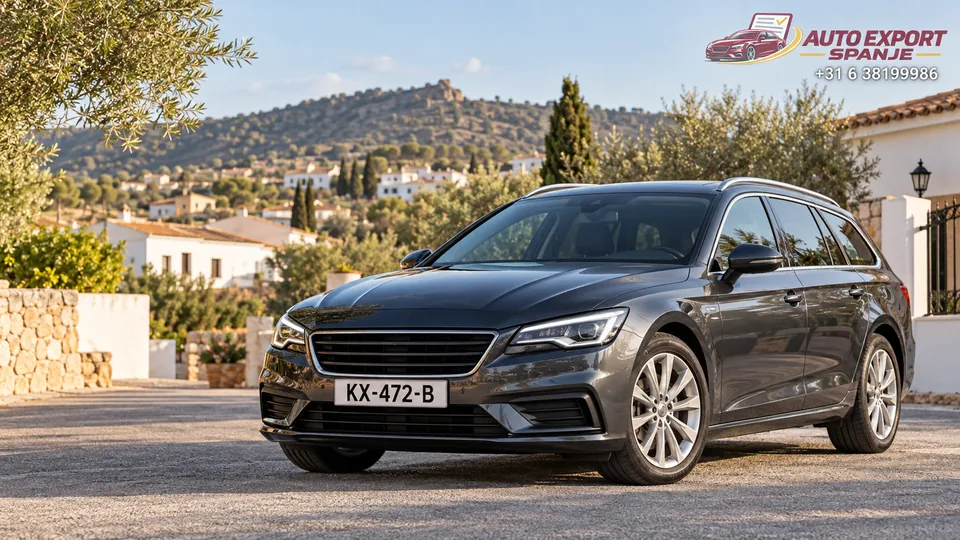

A tipper for a building site, a panel van for a trade business, or a van full of household goods for a move: whatever the commercial vehicle, its export starts at our RDW-recognised desk in Hengelo. Then comes registration in Spain, where commercial vehicles follow different tax rules from cars.
Deregistering a truck or van for export: what we do
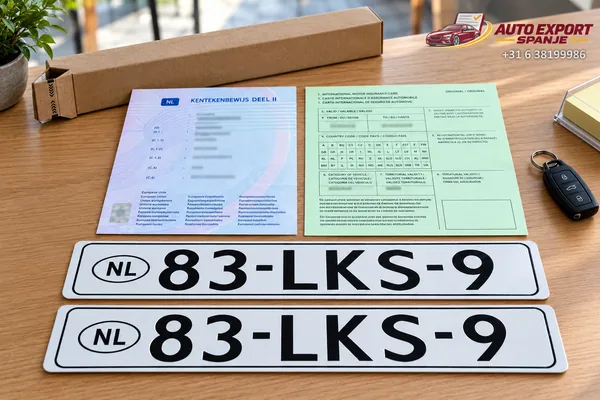
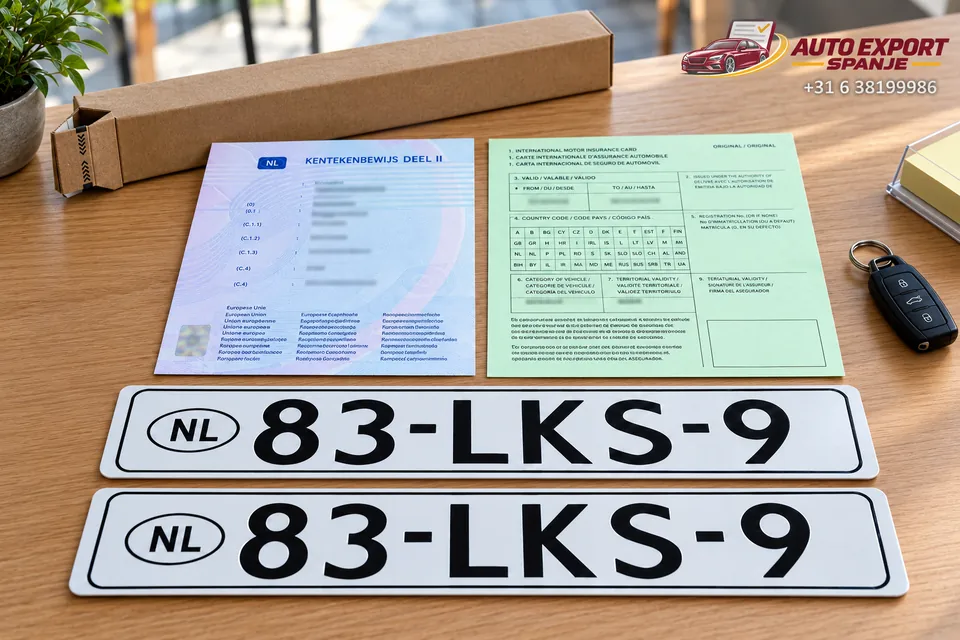
We deregister the truck or van from the Dutch vehicle register. The buyer receives the export certificate (kentekenbewijs deel II) and the registration card with one corner cut off; the seller receives the indemnification certificate. If the vehicle is driven, it gets two Dutch export plates and export insurance with a Green Card. For the export journey, a truck must be insured and have a valid APK, the Dutch roadworthiness test.
If the buyer is a company, we also need its name, address and VAT number. If the buyer wants the company name on the export certificate, that is only possible at one of the RDW's own locations. For trucks and heavy commercial vehicles, insurance and processing costs can be higher, so the price is on request and always confirmed in advance. More about the papers is on Dutch car export documents.
Checklist
- Valid passport, ID card or driving licence of the person the export is registered to
- The Dutch registration card (kentekencard) with its registration code (tenaamstellingscode), or the old paper parts (part 1B and the transfer certificate)
- The Dutch yellow number plates (one plate for a motorcycle, scooter, moped, caravan or trailer)
- The current mileage
- The full foreign address of the buyer or new owner
- For insurance and plates: start date, destination and route, plus details of the policyholder and the driver
Source: RDW. For a business buyer we also need the company name, address and VAT number.
Exporting a van remotely when the buyer stays in Spain
If the buyer does not come to the Netherlands, the RDW allows a contact person there to arrange the export. It can also be done remotely: we prepare the export online, you send the yellow plates to our desk by post or courier, and we start once they arrive. Documents and plates are sent insured and tracked, also to an address in Spain: about 5 working days with DHL, or about 1 working day with DHL Express.
If the van is already in Spain, we can still deregister it for export, through a separate procedure handled entirely by post. Ask us first what we need.
Commercial vehicles exempt from Spanish registration tax
The Spanish registration tax IEDMT does not apply to every vehicle. The law (Ley 38/1992, article 65) excludes, among others:
- trucks in categories N2 and N3, meaning goods vehicles above 3.5 tonnes;
- vans in category N1 (up to 3.5 tonnes) used substantially for a business activity, which is presumed when the owner is entitled to deduct at least 50 percent of the VAT;
- buses in categories M2 and M3.
Even when no tax is due, the Spanish tax agency requires a declaration on form 05 or 06, except for vehicles the agency itself has approved. If the reason for the exemption changes within four years, for example because the van is put to private use, the tax becomes payable. A truck or van converted into living accommodation is taxed.
Registering commercial vehicles at Tráfico: heavy vehicles and companies
The steps are the same as for a car: ITV inspection before registration, taxes and registration at the Jefatura Provincial de Tráfico. They are set out on registering a car in Spain. Two differences matter:
- Companies and other legal entities apply for registration electronically; the counter is for private individuals only.
- For goods or mixed vehicles with a maximum mass above 6 tonnes and a payload above 3.5 tonnes, and for passenger vehicles with more than nine seats, Spain asks for a declaration from the transport authority about the authorisation.
ITV inspection intervals for trucks and vans in Spain
After registration comes the periodic ITV. Trucks over 3.5 tonnes (N2 and N3) are inspected every year until they are 10 years old, then every six months. A van up to 3.5 tonnes (N1) is exempt for the first 2 years, then inspected every two years up to 6 years, every year up to 10 years and every six months after that. Age counts from first registration.
The drive to Spain: white plates, insurance and no EX-A
A customs export declaration (EX-A) is only needed for destinations outside the EU; Spain is in the EU, so it does not apply here. In the Netherlands, the truck may be driven on export plates for 14 days after deregistration, never beyond the expiry of the APK. The countries along the way apply their own rules, so check beforehand what applies in France and Spain. If the vehicle travels on a low-loader, it usually needs no driving insurance, but it does need the export document.
Selling a van or truck to a foreign buyer instead? See sell your car for export.
Exporting today?
Call or message us for free advice or an appointment, also outside office hours. On Sundays a higher rate applies; you always know the price in advance.
Questions about exporting a truck or van to Spain
Is Spanish registration tax due on an imported truck?
Usually not. Trucks in categories N2 and N3 fall outside the IEDMT, and so does an N1 van used substantially for business. A declaration to the Spanish tax agency is still required. If the vehicle has been converted into living accommodation, registration is taxed.
Does a truck going to Spain need an EX-A customs declaration?
No. An export declaration at Dutch Customs (EX-A) is required for destinations outside the EU. Spain is in the EU, so for a truck or van going there the export document is enough, plus white plates with export insurance if it is driven.
What details do you need when a Spanish company is buying?
The company name, address and VAT number of the buyer, alongside the usual papers such as the registration card and the yellow plates. If the company wants its name on the export certificate, that is only possible at one of the RDW's own locations.
How often does a truck need an ITV inspection in Spain?
Trucks over 3.5 tonnes (N2 and N3) are inspected every year up to 10 years old and every six months after that. A van up to 3.5 tonnes (N1) is exempt for the first 2 years, then inspected every two years up to 6 years, every year up to 10 years and every six months after that.
What does it cost to export a truck?
For trucks and heavy commercial vehicles the price is on request, because insurance and processing costs can be higher. You always know the price in advance. Payment is in cash or by bank transfer.
Sources on commercial vehicles and Spanish registration
- BOE: Ley 38/1992 de Impuestos Especiales (impuesto de matriculación)
- BOE: Reglamento General de Vehículos (Real Decreto 2822/1998)
- BOE: Real Decreto 920/2017: inspección técnica de vehículos
- Sede Electrónica DGT: Matriculación de vehículos nuevos y vehículos provenientes del extranjero
- RDW: Exporting a vehicle
Checked on 1 November 2026